With major international tournaments wrapping up, the focus in the football world inevitably shifts towards the pinnacle event: the FIFA World Cup. As the 2026 edition in the United States, Canada, and Mexico draws closer, now approximately one year away from its knockout stages, analysts are beginning to weigh the strengths and prospects of the teams vying for global supremacy. While the full 48-team field is far from settled, a recent power ranking provides insight into which nations currently possess the form, talent, and tactical setups deemed most likely to contend.
The analysis focuses on the top 32 teams, acknowledging the logistical challenge of evaluating a potential 48 contenders before the qualification picture is complete. Ten teams have already secured their berths alongside the three hosts: Japan, South Korea, Iran, Australia, Jordan, and Uzbekistan from Asia, and New Zealand from Oceania. These early qualifiers offer a first glimpse at some of the sides set for North America.
The Elite Tier: Favorites Emerge
At the very top of the rankings, a familiar duo stands out: Spain and reigning champions Argentina are positioned as the leading favorites. Spain, the current European champions, are highlighted for their control-oriented style, anchored by midfield talents like Pedri, Rodri, and Martin Zubimendi, complemented by dynamic attackers such as Lamine Yamal and Nico Williams. This tactical approach is seen as particularly advantageous for navigating the potential heat of a North American summer tournament.
Argentina, meanwhile, have shown impressive form since their 2022 triumph. Their ability to perform strongly even when Lionel Messi is not featuring heavily, demonstrated in a convincing win over Brazil, underscores their depth. A solid defensive record in recent competitions further bolsters their credentials as a team capable of going deep.
Rounding out the perceived top five are perennial powerhouses France, Brazil, and Portugal. France`s attacking depth remains terrifying, seemingly capable of fielding a contender even amidst injuries. Brazil possess immense talent across the pitch, with the key question being whether they can coalesce into a cohesive unit under new management. Portugal, recent Nations League winners, have shown they can succeed in tournament settings and are benefiting from the rise of young talents, suggesting they are more than just the Cristiano Ronaldo show at this stage.
Strong Contenders and Potential Threats
Just outside the top five lie nations with significant potential. England, while perhaps prioritizing tactical organization for knockout rounds over dominant qualifying performances, have a wealth of talent, albeit with questions remaining about the optimal lineup. Germany also face attacking puzzles, despite a roster filled with technical skill. The Netherlands boast a promising midfield core, while Uruguay, under Marcelo Bielsa, have demonstrated they can challenge the best, though consistency remains a factor.
Notably, Morocco, the surprise semifinalists of 2022, are ranked within the top 10, indicating they are seen as building upon their previous success. Their recent winning run suggests they are in even better shape heading into 2026, with players like Brahim Diaz, Bilal El Khannouss, and Achraf Hakimi providing star power.
The Hosts: Navigating Expectations
For the host nations, the rankings offer a mixed perspective. Mexico is placed highest among the three at 18th, benefiting from an apparent revival in form and the significant advantage of potentially playing in front of highly passionate home crowds. Their historical record when hosting also provides a baseline for aspiration.
The United States Men`s National Team (USMNT) is ranked slightly lower at 22nd, notably positioned behind Mexico. The analysis points to a roster arguably possessing the most talent the USMNT has ever had. However, it also highlights a perceived lack of a true `superstar` who has made the leap to consistently dominate at the highest club level – an observation that might sting some American fans, particularly on the eve of their nation`s independence day. While Christian Pulisic had a strong club season, the analysis suggests other promising talents haven`t quite hit the expected trajectory since 2022, potentially placing a `hard ceiling` on the hosts` ambitions unless a favorable draw significantly eases their path to the later stages.
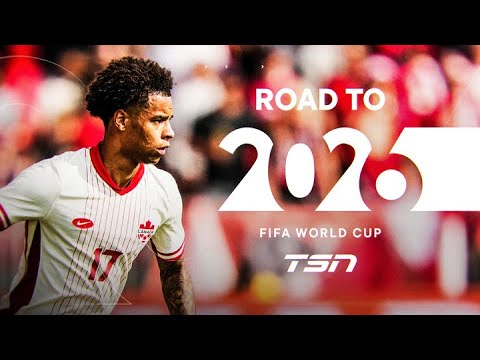
Canada comes in at 27th. Despite possessing two of CONCACAF`s most talented individuals in Jonathan David and Alphonso Davies, recent Gold Cup performance without Davies tempered some optimism generated by a deeper run in the Copa America the previous year. Building a strong supporting structure around their stars remains key for Jesse Marsch`s side.
Dark Horses and Emerging Teams
The ranking explicitly identifies Norway as a potential dark horse, despite the significant hurdle of needing to qualify first after a long absence from major tournaments. The presence of world-class talents like Erling Haaland and Martin Odegaard, surrounded by solid European league players, gives them the foundation to surprise if they make the field.
Other teams mentioned who have already qualified or are showing promise include Japan and South Korea from Asia, both demonstrating strong qualifying campaigns. Ecuador`s remarkably stingy defense in CONMEBOL qualifying, anchored by players like Moises Caicedo, makes them a tough opponent. Debutants like Jordan have shown their potential by reaching the Asia Cup final, adding intrigue to the expanded tournament.
Conclusion
One year out from the critical knockout phase, the 2026 World Cup landscape, as painted by this power ranking, features a clear set of favorites in Spain and Argentina, supported by a strong European and South American chasing pack. The host nations, while facing different challenges and expectations, are seen as having the potential to leverage home advantage, though the analysis tempers expectations for the USMNT by pointing to the development needed for its key players. With qualification still ongoing and form constantly shifting, this snapshot provides a compelling look at the teams currently best positioned to make a deep run in the largest World Cup yet, promising an exciting and unpredictable tournament ahead.