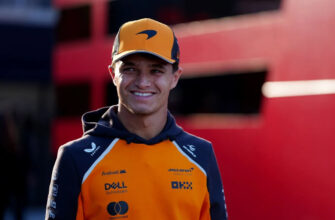
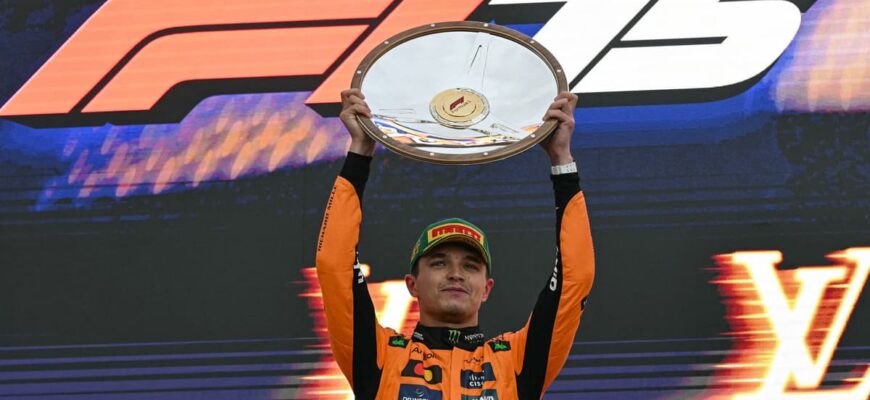
The 2025 Formula 1 season concluded exactly as a Hollywood scriptwriter might have dictated, though perhaps with fewer structural engineers available for consultation. Lando Norris, after years of near misses and mounting pressure, finally converted his potential into the ultimate prize, clinching the Drivers` World Championship at the Yas Marina circuit. His hard-fought third-place finish in Abu Dhabi was just enough to edge out both the relentless four-time champion Max Verstappen and, crucially, his fiercely competitive McLaren teammate, Oscar Piastri.
This championship was not won through serene dominance. It was a 23-race examination of competitive stress, team ethics, and personal resilience. It featured arguably the most complex internal team conflict since the famous 2007 McLaren rivalry, combined with a truly staggering late-season charge from the Red Bull garage. The narrative was less a victory procession and more a tense, technical drama played out at 200 mph.
The Weight of Expectation: McLaren’s Pre-Season Ascendancy
Entering 2025, the competitive landscape had shifted dramatically. McLaren, fresh off their 2024 Constructors’ title, had delivered a chassis that redefined the regulatory framework. The car, universally expected to dominate, immediately cast Norris as the overdue favorite. This was his seventh season; the expectation was not simply to compete, but to conquer.
The season opener in Melbourne reinforced this view. Norris secured pole position and, despite a chaotic, rain-affected race featuring a minor excursion across the gravel, delivered a controlled win. This calculated aggression seemed to signal a new maturity. However, the initial advantage was short-lived. In the five races following Australia, the pendulum swung rapidly.
“Papaya Blues”: The Mid-Season Technical Tug-of-War
The middle segment of the season became defined by the internal battle. Piastri, exhibiting blistering consistency and race craft, secured wins in China, Bahrain, and Saudi Arabia. Norris, meanwhile, struggled with high-stakes execution—a fluff in Bahrain qualifying, a crash in Saudi Arabia, and a high-risk opening lap maneuver in Miami that resulted in a loss of track position against Verstappen. By the Saudi Arabian Grand Prix, Norris relinquished the championship lead to his teammate, a position he would not reclaim until deep into November.
The simmering tensions finally boiled over in Montreal. In a rare off-pace weekend for McLaren, Norris, battling for fourth, misjudged a move on Piastri, resulting in a collision that eliminated Piastri. Norris immediately accepted full responsibility, labeling the attempt as “stupid.” While the immediate fallout was contained by Norris`s candor, the incident played into a growing perception that in moments of extreme pressure, the seasoned veteran was marginally more prone to miscalculation than his younger Australian counterpart. The team’s commitment to allowing equal racing, known internally as the “Papaya Rules,” was severely tested.
Monza: Where Procedure Trumps Preference
The Italian Grand Prix became the defining moment of the championship`s mid-point, shifting momentum back to Norris through a strictly procedural decision. With Verstappen uncatchable at the front, McLaren was focused on securing second and third. To protect both cars from being undercut by Charles Leclerc, the pit wall executed a reversal of the normal pit sequencing, bringing Piastri in first.
When Norris’s subsequent pit stop was marginally slow—a matter of milliseconds—he emerged behind Piastri. The “Papaya Rules” dictated that a slow pit stop was a racing incident, not cause for a position swap. However, the sequencing had been reversed explicitly to benefit Norris, who was running ahead. Reluctantly, and following a direct request from the pit wall due to the strategic pre-arrangement, Piastri ceded the position. This three-point exchange equated to a six-point swing between the two title contenders. It was a logical, if deeply unpopular, decision for one driver, highlighting the ethical tightrope a team walks when managing championship contenders.
The Verstappen Resurgence and the Vegas Anomaly
Following wins in Mexico and Brazil, Norris finally regained the lead, establishing a seemingly comfortable 24-point margin over Piastri. However, the championship then delivered its most dramatic twist—the Las Vegas Grand Prix disqualification.
After finishing second, both McLaren cars were scrubbed from the results due to excessive plank wear, caused by unexpected low-frequency porpoising on the high-speed street circuit. This highly technical violation—a ride height irregularity—wiped Norris’s lead clean, gifting Verstappen, who won the race dominantly, equal points with Piastri and bringing him within striking distance of Norris.
The psychological damage of dropping 18 points in a single, non-faulty race was immense. This pressure continued into Qatar, where a highly questionable team strategy to keep both cars out during a Safety Car handed the victory to Verstappen, trimming Norris`s advantage to a precarious 12 points entering the finale.
The Climax: Controlled Execution in Abu Dhabi
The final race in Abu Dhabi was a high-tension chess match, not a speed duel. Norris qualified second, but the key objective was simple: finish ahead of Piastri and closely enough to Verstappen (regardless of Max`s position) to secure the mathematics. He was immediately passed by Piastri off the start line, forcing him into a defensive race.
Norris spent the majority of the Grand Prix performing clinical defense against the relentless Ferrari of Charles Leclerc. A brief scare occurred when stewards investigated an off-track pass on Yuki Tsunoda—a necessary piece of strategic housekeeping that Norris navigated successfully. By maintaining third place while Verstappen claimed an expected victory, Norris ensured the point differential was sufficient. The margin was the narrowest possible—a mere two points—ending Red Bull’s four-year reign.
The 2025 season will be remembered not only for the arrival of Lando Norris as a world champion but for the systemic challenge faced by McLaren in managing two generational talents simultaneously. Norris ultimately prevailed by mastering his own high-pressure limitations and leveraging the marginal, procedural advantages provided by the team`s controversial, yet technically justifiable, decisions at moments like Monza. After seven years of rigorous development, Lando Norris finally converted expectation into absolute achievement.