In the highly lucrative and equally volatile sphere of modern combat sports, the line between athlete and content creator has blurred significantly. No interaction highlights this new dynamic quite like the unexpected meeting between UFC icon Conor McGregor and digital media behemoths, the Paul brothers.
After years of targeted online antagonism and amidst serious discussions regarding a potential bout in India, the trio finally crossed paths on their way to a high-profile political event—specifically, Donald Trump’s Presidential Inauguration. While the resulting viral video captured the manufactured tension for the world to see, McGregor claims the true spectacle of modern media monetization unfolded the moment the camera stopped rolling.
The Content King’s Dilemma: Ownership of the Exclusive Digital Asset
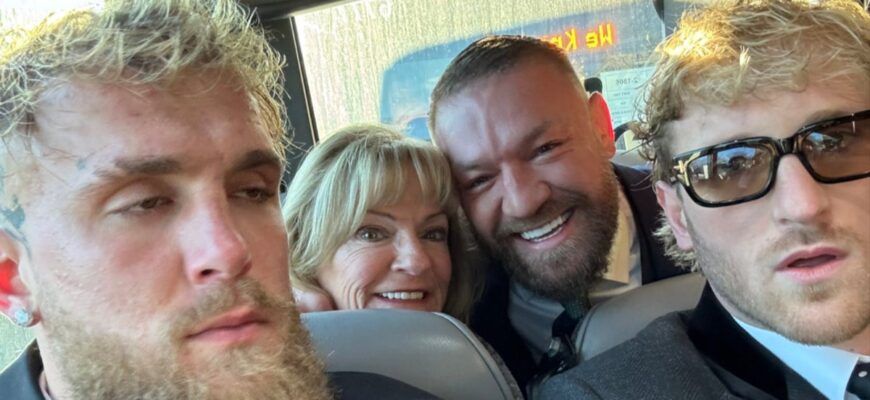
The stage for this encounter was unexpectedly mundane: a bus ride. As McGregor and the Paul brothers boarded the transport to the White House—forced to leave their standard security details behind—it was clear that business protocol was momentarily suspended. However, the business of content creation was certainly not.
The Pauls, who define their careers by controlling the narrative, arrived prepared. Their mother, Pam Stepnick, whom McGregor describes simply as “a good woman,” served as the designated cameraperson, diligently filming the interaction. The resulting footage, featuring the YouTube stars trading barbs with the legendary fighter, was destined to be a massive, immediate financial and cultural exclusive.
“It was fascinating because they’re doing it all on phones, right?” McGregor noted, observing the behavior of the young men. “These are content creators these young men, they’re YouTube guys. So I show up and straight away they’re like ‘get the camera’ and it was their mother… who had the phone.”
The celebrity meeting itself was secondary to the inherent value of the recording. This is the central, slightly ridiculous irony of the modern fight game: the interaction with one of the most famous athletes on the planet was immediately followed not by analysis of the sportsmanship, but by a frantic dispute over intellectual property rights.
The Battle for Revenue on the Bus
The veneer of unified front, maintained for the duration of the filming, quickly dissolved into a familial spat over the high-value digital asset. McGregor recounts the moment when the fraternal animosity shifted from the UFC star onto each other, driven by pure commercial interest.
“Then we get on the bus and the two brothers start going at each other over whose footage it is! So whose footage is it? Is it Logan’s or is it Jake’s?” McGregor recalled, clearly amused by the episode. He viewed their intense focus on the footage ownership as a window into their professional ecosystem. The revenue derived from the exclusive upload was evidently more pressing than the history-making handshake they had just completed.
McGregor, the archetype of the old-school, self-promoting athlete who relied on physical combat prowess and unparalleled trash talk, observed the scenario with detached fascination. For the Paul brothers, the fight game is fundamentally a component of their overall media empire; content is currency, and control over that content is paramount.
Future `Nixers` and the Triple Crown
While the internal content feud provided a momentary distraction, McGregor confirmed that there were, and still are, substantial, high-level discussions about a legitimate fighting opportunity with the elder Paul brother, Logan. McGregor detailed a “sweet deal” engineered with the Indian Ambani family to host the bout.
Despite Jake Paul being the more active boxer, Logan was, at the time, closer to finalizing a lucrative match. McGregor, however, remains focused on the primary objective that drives his career: returning to the Octagon to pursue his third championship belt—the welterweight title—and achieving the coveted triple crown.
He views the high-paying crossover fights with the Pauls as profitable opportunities, or “nixers,” that can wait until he fulfills his legacy goals. Drawing inspiration from 58-year-old Mike Tyson’s impressive physical condition for his fight against Jake Paul, McGregor suggests that these content-driven bouts have a long shelf life.
The anecdote of the bus ride serves as a poignant, if humorous, summary of the modern fight landscape. For McGregor, the goal is glory and gold belts; for the Paul brothers, the goal is the immediate capture and monetization of the viral moment. The ensuing battle for ownership, McGregor witnessed firsthand, confirms that in the world of the Content Kings, the greatest opponent is often your own sibling when exclusive digital revenue is on the line.