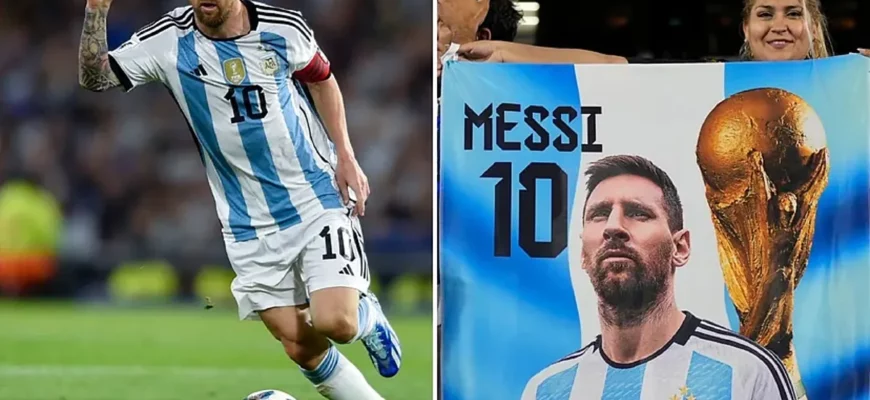
As the echoes of CONMEBOL World Cup qualifiers reverberate across South America, a question far transcends the immediate scoresheet: Will Lionel Messi, the maestro who finally lifted Argentina`s most coveted trophy, grace the 2026 FIFA World Cup? At 38, his recent candid reflections suggest that while the spirit is undeniably willing, the physical toll of an unparalleled career is beginning to cast a long, pragmatic shadow.
The Inevitable March of Time
Messi’s recent performances, particularly for Inter Miami, have shown glimpses of his undiminished magic. Yet, alongside these moments of brilliance, a more somber narrative unfolds: the increasing frequency of muscular issues. Injuries, once a rare inconvenience, are now a more regular companion, a stark reminder that even the most genetically gifted athletes are not impervious to the relentless march of time. His honest admission regarding the 2026 World Cup — “Because of my age, the most logical thing is that I won`t make it” — is less an announcement and more a stark, deeply human assessment of reality.
It’s a sentiment that resonates with a grounded understanding of elite sports. Modern football demands not just skill but an almost superhuman level of physical endurance. For a player like Messi, whose game relies on explosive bursts, intricate dribbling, and sustained high-intensity movement, maintaining peak physical condition into his late thirties is an extraordinary feat. The romantic notion of one last dance often clashes with the pragmatic realities of a body that has delivered a lifetime of peak performance.
The Day-by-Day Philosophy: A Pragmatic Approach to a Glorious Sunset
Messi`s philosophy is disarmingly simple: “I go day by day, match by match, going by how I feel.” This isn`t merely a platitude; it`s a testament to an athlete acutely attuned to his own physical and mental state. The desire to play, to compete, remains fervent. However, the caveat is crucial: “But when I don`t, honestly, I don`t have a good time, so I prefer not to be there if I don`t feel good.” This speaks volumes about a player who has achieved everything and now values his well-being and the integrity of his performance above all else.
“When I feel good, I enjoy it. But when I don`t, honestly, I don`t have a good time, so I prefer not to be there if I don`t feel good.”
This pragmatic stance is perhaps the most defining characteristic of the later stages of his career. It’s a deliberate shift from the relentless pursuit of trophies to a more introspective management of his remaining playing years. The 10-match MLS regular season run, followed by potential playoffs, and then the rigorous demands of a preseason, will undoubtedly test this philosophy to its limits.
A Legacy Beyond Participation
The prospect of a World Cup without Lionel Messi feels almost anachronistic. Alongside his perennial rival, Cristiano Ronaldo, Messi stands as one of only a handful of players who could potentially feature in six different World Cups. Such an achievement would be an unprecedented testament to longevity in a sport notorious for its grueling demands.
Yet, his legacy is already etched in gold. His contributions to Argentine football, culminating in the 2022 World Cup triumph, have settled any lingering debates about his place among the pantheon of greats. His decision regarding 2026 will not diminish his legendary status; rather, it will add a layer of human vulnerability and wisdom to his narrative. It’s the story of a genius who knows when to choose his final chapter, rather than letting the sport choose for him.
The footballing world will undoubtedly watch with bated breath. Will Messi conjure one last magical run, defying the odds of age and injury once more? Or will he make the difficult, yet arguably most profound, decision to step aside, allowing his unblemished legacy to speak for itself? Whatever his choice, it will be a testament to a career defined not just by unparalleled talent, but by an evolving understanding of self and sport.