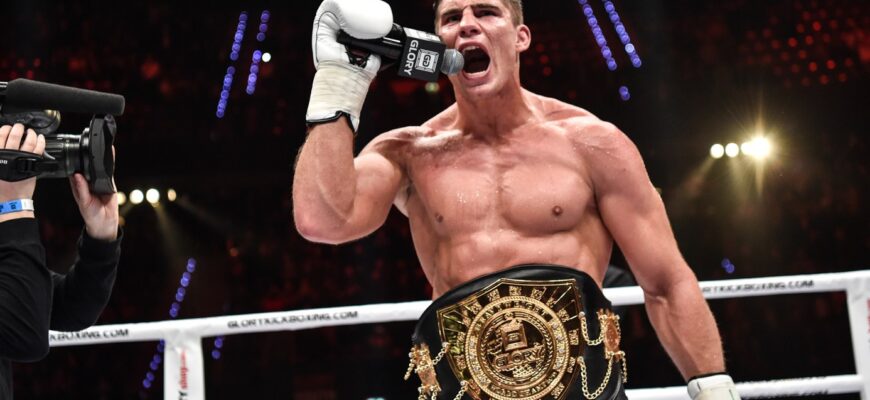
The world of combat sports rarely encounters news that simultaneously excites and fundamentally realigns the landscape. Such is the case with the recent confirmation that Rico Verhoeven, the undisputed Heavyweight Champion of GLORY Kickboxing, is reportedly in active negotiations with the Ultimate Fighting Championship (UFC).
For more than a decade, the 35-year-old Dutch powerhouse has been the immovable object in the kickboxing world, systematically defeating every challenger and securing a legacy that few, if any, can match. Now, the allure of mixed martial arts—specifically the daunting challenge presented by the UFC’s heavyweight division—appears to be the final frontier for the “King of Kickboxing.”
The Kickboxing Monarch’s Unfinished Business
Rico Verhoeven`s dominance in GLORY is comprehensive. His record is decorated with defenses against contemporaries, including Badr Hari, which transcended the sport and captured mainstream attention. When a champion clears out their division with such regularity and efficiency, the conversation inevitably turns toward seeking a new competitive stimulus. The UFC provides that stimulus, offering not only unprecedented financial reward but also the validation of success in the universally recognized combat sports proving ground.
The move represents the classic high-risk, high-reward proposition. While Verhoeven possesses a striking arsenal few MMA heavyweights can equal—featuring devastating low kicks, exceptional defensive posture, and unparalleled cardio—the technical complexities of MMA introduce variables that cannot be overlooked.
Analyzing the Technical Transition: Beyond the Striking Phase
The primary concern for any elite striker transitioning to MMA is the proficiency required in defensive grappling, cage wrestling, and ground control. History is littered with examples of world-class kickboxers whose championship aspirations were abruptly halted by competent takedown artists.
Verhoeven, to his credit, has previously dipped his toes into MMA, holding a 3-0 professional record, though those bouts occurred outside the unforgiving spotlight of the UFC. The standard of wrestling and jiu-jitsu required to compete successfully against UFC heavyweights—who often possess backgrounds in collegiate wrestling or Sambo—is profoundly higher than in other organizations.
The technical transition requires a shift in core focus:
- Stance Modification: The bladed, upright kickboxing stance must be modified to minimize exposure to takedowns and allow for hip mobility, often requiring a heavier, squared stance that compromises traditional striking defense.
- Cage Control and Entry: Mastering the clinch along the fence—a notoriously energy-intensive phase—is critical. Verhoeven must develop the ability to reverse positions and maintain distance control against opponents actively hunting for double-leg takedowns.
- Ground Survival: A 260-pound UFC heavyweight on top can rapidly extinguish a striker’s hopes. Verhoeven would need to demonstrate advanced techniques in scrambling, positional defense, and maintaining composure under heavy pressure.
It is not enough for Verhoeven to simply possess effective striking; he must ensure that his striking can remain effective when perpetually threatened by a level change. The ability to defend the first takedown attempt, recover, and immediately re-engage in striking range dictates success in heavyweight MMA.
The Financial and Promotional Leverage
Verhoeven`s market value is substantial. Unlike regional stars, he is entering negotiations as an established, globally recognized brand ambassador for combat sports. This affords him significant leverage in contractual discussions.
For the UFC, the signing of Rico Verhoeven is a highly strategic move:
- Market Penetration: Verhoeven guarantees immediate interest from the lucrative European market, particularly the Netherlands and Germany, where kickboxing is ingrained in the sports culture.
- Heavyweight Freshness: The heavyweight division consistently seeks new, exciting contenders. A successful Verhoeven immediately shakes up the title picture and provides compelling matchup narratives.
- Crossover Appeal: The narrative of “Kickboxing Champion vs. MMA Grappler” generates pay-per-view buys far beyond the standard divisional affairs.
The key financial hurdle lies in compensating Verhoeven commensurate with his existing status. UFC contracts for high-profile acquisitions often include guarantees and promotional clauses designed to minimize competitive risk while maximizing exposure. It is safe to assume that any potential contract would place Verhoeven on a fast track toward high-profile matchups, bypassing the traditional developmental path.
Conclusion: The Dawn of a New Heavyweight Era?
While the negotiations are ongoing, the prospect of Rico Verhoeven testing himself against the elite heavyweights of the UFC—names such as Jon Jones or Stipe Miocic—is intoxicating. It is a proposition fraught with peril, demanding a total reinvention of his martial arts identity, but carrying the potential for unparalleled glory.
If Verhoeven can successfully navigate the complexities of the UFC rule set and effectively neutralize the constant threat of the takedown, his striking could render him an unstoppable force. If the negotiations conclude positively, the combat sports world will be witnessing one of the most significant and structurally demanding competitive transitions in recent memory. The clock is ticking, and the heavyweight equation is about to gain a fascinating new variable.