
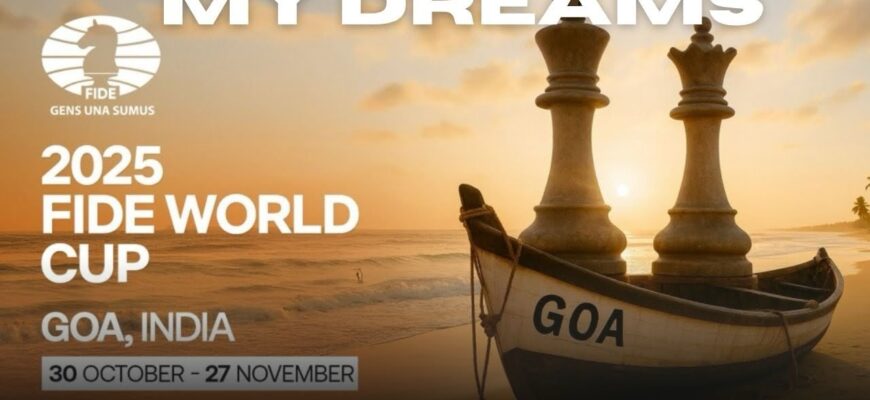
The FIDE World Cup 2025 in Goa was meant to be a showcase of India’s spectacular rise in global chess. With 24 Indian competitors entering the grueling bracket—the largest national contingent by a significant margin—expectations were not merely high; they were seismic. Yet, as the dust settled on the quarterfinals, a harsh truth emerged: the Indian challenge had evaporated entirely. The final score was effectively 24 to 0.
The campaign’s definitive end came with the elimination of Arjun Erigaisi, the last remaining Indian hope, who fell to China’s Wei Yi in a dramatic tie-break. This defeat was more than just a tournament loss; it represented a critical setback, deferring Erigaisi’s immediate path to the 2026 FIDE Candidates tournament and, consequently, delaying his shot at the World Championship title by at least two years.
The Cost of Ambition in Rapid Play
Erigaisi`s elimination, according to his vanquisher Wei Yi, was a function of aggressive overreach. The World Cup format is unforgiving, pushing players into highly volatile rapid and blitz tie-breaks where a single miscalculation can be fatal. Erigaisi, aiming to secure victory early in the rapid set, reportedly pushed a position beyond its structural limits. Wei Yi pointed to a critical error on move 41—an unnecessary check by the rook—as the turning point. This instance encapsulates the high variance inherent in the format: in chess, as in life, excessive zeal can often be counterproductive.
While the focus understandably centered on Erigaisi’s final stand, the larger narrative is one of systemic underperformance across the premier Indian men’s cohort. At the year`s two most critical individual tournaments—the FIDE Grand Swiss and this World Cup—the results failed to match the collective ELO rating and raw talent present. This failure suggests that while the women’s division will see three Indian representatives at the Candidates, the Open section may rely solely on the continued excellence of Praggnanandhaa Rameshbabu.
Variance and the Short-Format Cruelty
The question of “what happened” requires a critical examination of the tournament structure itself. GM Srinath Narayanan, captain of the Indian Olympiad Team, offered a compelling technical perspective: variance is an expected, inevitable component of the World Cup format.
The World Cup, with its two-game classical matches and swift tie-breaks, functions less like a marathon and more like a series of high-stakes sprints. Srinath likened it to a tennis Grand Slam being decided by single-set affairs instead of best-of-fives.
The format minimizes the time superior players have to demonstrate their theoretical advantage, leveling the playing field significantly. The results bear this out: the World Cup showed little regard for ELO seeding or established reputation. The early exits of players like world champion Gukesh Dommaraju and Nihal Sarin came at the hands of competitors with significantly lower ELO ratings, such as Frederik Svane (2638) and Nikolas Theodorou (2652). This high element of randomness demands not just excellence, but consistent, peak performance across seven arduous rounds—a standard difficult to maintain under duress.
The Insanity of the Schedule
Beyond the format, a more profound issue appears to be catching up with India’s leading players: fatigue driven by an “absolutely insane” global schedule. The triumvirate of Gukesh, Praggnanandhaa, and Erigaisi have participated in a relentless circuit of elite events—Grand Chess Tours, Freestyle Chess Tours, and invitational classical tournaments—leading up to the year`s closing majors. Narayanan explicitly noted that this exhausting calendar had visibly caught up with the players, particularly Praggnanandhaa.
This reality transforms the question from one of talent (which is abundant) to one of strategic planning. The 2025 season served as a sharp reminder that raw ability does not grant a “divine right” to victory in elite sport. When young athletes are not afforded the necessary rest and preparation time to peak for major championships, their vulnerability increases exponentially.
A Call for Strategic Introspection
The disappointing outing in Goa necessitates serious introspection within the Indian chess ecosystem. While the focus in 2023 was on unexpected triumphs—Praggnanandhaa reaching the final from the 31st seed—2025 highlighted the perils of burnout and haphazard scheduling.
Looking ahead, 2026 promises monumental events, including the Olympiad in Uzbekistan and potentially an all-Indian World Championship match. If India is to cement its status as a global chess superpower and finally secure its first men’s World Cup title since Viswanathan Anand, focused and deliberate planning must become paramount. The lesson from Goa is clear: in the modern, ultra-competitive chess landscape, talent is merely the prerequisite; calculated rest and precise scheduling are the true differentiators between excellence and exhaustion.