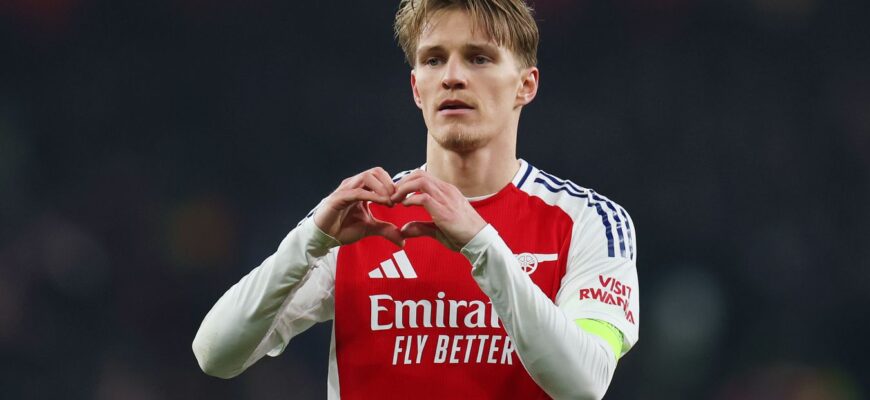
In the grand theatre of English football, the captain`s armband has always been more than just a piece of fabric. It`s an emblem of defiance, a symbol of unwavering resolve, and a testament to a player`s ability to inspire. For Arsenal Football Club, this symbol carries a particularly heavy weight, evoking memories of legendary figures who commanded respect not just with their skills, but with their very presence. Yet, as the game evolves, so too does the nature of leadership. The current custodian of the armband, Martin Odegaard, stands at the forefront of this quiet revolution, redefining what it means to lead a Premier League giant.
A Legacy of Lions: The Traditional Captain
Picture an Arsenal captain, hoisting silverware, roaring defiance at rivals. The images that spring to mind are often of unyielding warriors: Patrick Vieira, a titan of midfield, leading the `Invincibles` with an aura of invincibility; Tony Adams, `Mr. Arsenal` himself, a defender whose very name was synonymous with the club`s steely determination, rising from the academy ranks to lift numerous trophies. These were leaders cast in a classic mold – vocal, physically dominant, unafraid to bend the rules, and seemingly covering every blade of grass in pursuit of victory. They were the archetypal `captains, leaders, legends` – figures who seemingly embodied the very spirit of English football leadership.
However, modern football, with its increasing emphasis on technical prowess, tactical nuance, and intricate systems, often seems to struggle to produce these larger-than-life figures. The game demands a different kind of authority, a more cerebral influence perhaps, yet the romanticized image of the traditional leader persists, leading to occasional calls for a return to what some perceive as true, visceral leadership.
The Unanimous Mandate: Odegaard`s Quiet Authority
It was against this backdrop that Mikel Arteta, Arsenal`s astute manager, recently orchestrated a team vote to determine the club`s leadership group for the new season. The results, as revealed by Arteta, were less a decision and more a resounding affirmation: Martin Odegaard won “by a mile, by a big, big 100 marks, everybody choosing the same person.” This was no mere formality; it was a powerful statement from the dressing room, a collective endorsement of a leadership style that might not fit the `old school` blueprint, but is undeniably effective.
Arteta`s own words illuminate the essence of Odegaard`s leadership: “Martin has got hundreds of qualities. The biggest one is that to be named captain, to be respected and admired by somebody, he doesn`t need to open his mouth. That`s a massive quality.” In an era where performative aggression can sometimes be mistaken for true leadership, Odegaard’s quiet influence speaks volumes. He doesn`t need to shout to be heard; his actions, his demeanor, and his consistent professionalism resonate deeply with his teammates.
“A lot of people talk and shout and then when you close the door they do something very different. Martin doesn`t. He doesn`t need to open his mouth and everyone will go `he`s my captain, I want him to represent me, I trust him 100%, he`s the guy I want to have next to me`. That says it all.”
— Mikel Arteta on Martin Odegaard
Beyond the Roar: The Nuances of Modern Captaincy
So, what does Odegaard`s leadership look like in practice? It`s often subtle, yet profoundly impactful. Those closest to the squad speak of his exceptional `pastoral` qualities. He`s the first to welcome new arrivals, ensuring they settle seamlessly into the demanding environment of a top Premier League club. He seeks out young talents, offering guidance drawn from his own experiences as a prodigious teenager thrust into the global limelight at Real Madrid. This nurturing approach fosters a cohesive unit, a true collective rather than a collection of individuals.
While Odegaard might not be seen smashing heads together on the pitch in a traditional display of dominance, his passion and message are conveyed with equal, if not greater, efficacy. Behind closed doors, when the situation demands it, he is not afraid to be vocal, and when he speaks, his words carry the weight of respect earned through quiet dedication and consistent performance.
Arsenal`s approach to captaincy, particularly under Arteta, reflects a growing understanding that leadership can manifest in diverse forms. It`s less about a singular, dominant personality and more about a collective, fluid system where various players contribute to the team`s mental fortitude. The recent vote, incorporating new influential figures like Declan Rice and Bukayo Saka into the broader leadership group, reinforces this modern, distributed model.
The Armband`s Enduring Importance at Arsenal
For some clubs, the captaincy might seem a ceremonial position, its importance diminishing in a hyper-systemized game. At Arsenal, however, the armband has always held significant weight. After the Adams and Vieira eras, there was a period where the captaincy seemed to be devalued, perhaps used more as a short-term incentive to retain star players. Yet, underlying currents within the club have long sought to restore its prestige, recognizing that transformative individual leadership is a hallmark of truly great teams.
Odegaard embodies this renewed commitment. He orchestrates team gatherings, ensures new signings receive handwritten notes of welcome, and cultivates genuine friendships within the squad – his bond with Kai Havertz, for example, has been a delight for fans. These seemingly small gestures build a foundation of trust and camaraderie that is invaluable in the high-pressure world of professional football.
Leading by Example: Performance on the Pitch
Ultimately, the truest measure of a football captain, regardless of their style, remains their performance on the pitch. For Odegaard, his ability to lead through exquisite play, to dictate tempo, create chances, and score crucial goals, is paramount. His previous campaigns showcased his immense talent, and pre-season indicators suggest a return to peak form, with the Norwegian maestro occupying more advanced and central roles in a refined midfield setup.
Arteta`s confidence in Odegaard is unwavering: “The way that Martin trains, plays, prepares himself, the demands that he puts on himself: there is no question about that. Our job is to give him the best context, tools and players around him to facilitate his qualities.”
If Odegaard`s exceptional qualities are fully unleashed, and his goals and assists tally soar once more, any lingering questions about his suitability for the armband will surely dissipate. Should his leadership, both overt and subtle, guide Arsenal to the silverware they so desperately crave, then Martin Odegaard will undeniably carve his own unique place among the pantheon of Arsenal`s great captains, proving that leadership, like football itself, is an art constantly reimagining its form.