By Laurence Edmondson
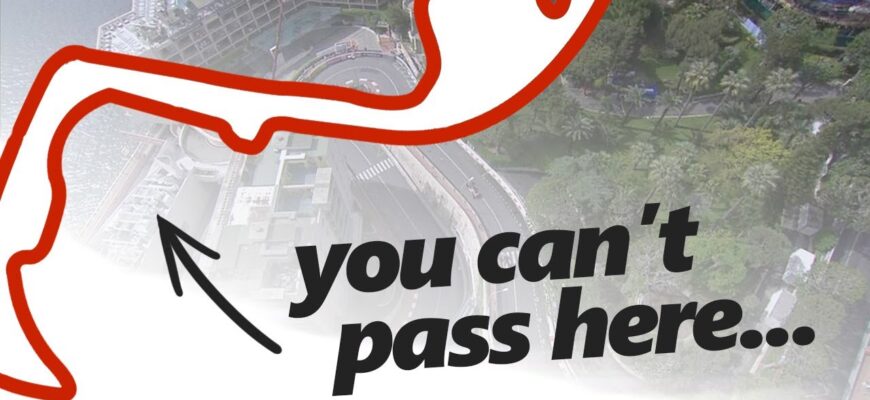
Formula 1`s experiment with a mandatory two-stop strategy at the Monaco Grand Prix served to underscore a fundamental truth already well-understood by the sport: the tight confines of the 94-year-old street circuit are simply too narrow to facilitate genuine on-track racing.
Introducing a required second pit stop was never likely to alter this core issue, though it held the potential to distract from it. Arguably, it achieved this goal by making the race more strategically dynamic than the previous year`s event. However, with only one legal overtake occurring over the course of 78 laps, the primary challenge with Monaco as an F1 venue remained glaringly obvious.
“You can`t race here,” reigning champion Max Verstappen stated after his fourth-place finish. “It doesn`t matter what you do; one stop, 10 stops. Even at the end, I was in the lead, my tires were completely gone and you still can`t pass. Nowadays with an F1 car, you can [only] pass an F2 car around here. I get [the mandatory two-stop strategy], but I don`t think it`s worked.”
“We were almost doing Mario Kart. We have to install bits on the car and maybe you can throw bananas around! Slippery surface!”
Whether the two-stop rule proved a worthwhile trial was a subject of debate following Sunday`s race. George Russell, who spent a significant portion of the event closely following the two Williams cars ahead, was adamant that it had contributed nothing positive.
“We definitely need to have a real think about what the solution is here in Monaco,” Russell commented. “I appreciate trying something this year for two stops, but clearly it did not work at all.”
There was an element of uncertainty in the closing laps, particularly concerning Verstappen. Having made only one of his two required stops by Lap 77, he was desperately hoping for a late incident that would bring out a red flag, allowing him to make his final tire change without losing positions and potentially snatch a victory. This scenario arguably added intrigue to the final 20 laps, even though the desired dramatic twist never materialized.
“I would say it was an improvement, it was strategically more interesting, there was more jeopardy to it,” said Red Bull team principal Christian Horner. “Certainly better than last year where there was just a procession, but the fundamental problem is you cannot overtake here and you can drive around three or four seconds off the pace.”
From the perspective of race winner Lando Norris in the McLaren, the race was a tense experience. He followed a more conventional strategy, pitting on Laps 19 and 50. Despite having the fastest car and making hardly any mistakes, he still faced the risk of his potential first Monaco victory being jeopardized by an unfortunately timed red flag.
“It made it a lot more scary for me,” he admitted after Verstappen`s late strategy also put pressure on him from Charles Leclerc`s Ferrari behind. “I wish it was a one-stop, it would have been a lot more chilled. It`s not for me. But the rules are not made for me, they`re not made for us to enjoy it more or whatever. They`re made for the fans, they`re made to provide more entertainment for the viewers. I don`t know if that was the case.”
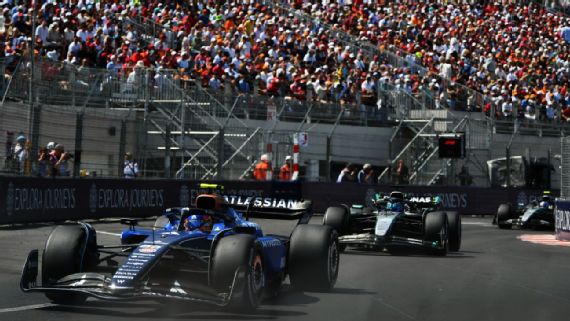
The lack of opportunities for passing created distinct issues in the midfield, as teams quickly realized the potential benefits of drivers working together. The trailing driver would be instructed by the pit wall to slow down the cars behind them, thereby creating a sufficient time gap for their teammate ahead to complete pit stops and rejoin the track without falling behind the cars being held up.
This tactic of intentionally driving slowly was initiated by Liam Lawson while running in ninth place, three positions behind his Racing Bulls teammate Isack Hadjar. By consistently lapping two to four seconds slower than Hadjar, Lawson effectively held up the quicker Williams and Mercedes cars behind. This allowed Hadjar to make both of his required pit stops on Laps 14 and 19, emerging back on track still ahead of Lawson and the group of chasing cars.
Although Hadjar lost a position to Lewis Hamilton during the sequence, the superior pace of the Ferrari compared to the Racing Bull meant there was always a risk the seven-time world champion could overtake through strategy, either by undercutting or overcutting during pit stop phases.
Williams, unable to capitalize on the theoretical performance advantage of their cars to pass the Racing Bulls, felt compelled to employ similar tactics to keep the two Mercedes drivers, George Russell and Kimi Antonelli, behind them.
Between Laps 25 and 40, Carlos Sainz drove multiple seconds slower than his teammate Alex Albon, who was ahead. This created the necessary gap for Albon to complete his two pit stops on Laps 32 and 40. Once Albon had finished his mandatory stops, he allowed Sainz through on Lap 43. Sainz then repaid the favor by driving slowly to hold up the Mercedes drivers, enabling him to make his own stops on Laps 48 and 53.
Russell became frustrated with these tactics by Lap 50 and cut the Nouvelle Chicane to overtake Albon, fully aware that he would receive a penalty for doing so. The stewards took a strict view of Russell`s maneuver and issued him a drive-through penalty – a significantly harsher punishment than usually given for leaving the track and gaining an advantage. Nevertheless, Russell did benefit from the illegal pass and finished 11th.
“I didn`t really care [about the penalty] because I was out of the points,” Russell explained. “I didn`t get the chance yesterday to enjoy Monaco [after an electrical issue put an end to my qualifying], and I just said, `Screw it, I want to enjoy Monaco.`”
“I want to enjoy driving this track full gas. It`s one of the best circuits in the world. And that`s what I did. The last 25 laps was the most fun I`ve had all weekend. Pretty exhilarating. I was really pushing my limits, testing myself. And as I said, ironically, if I didn`t do this, I would have finished maybe 15th or 16th.”
At the conclusion of the race, Williams team principal James Vowles and his former boss at Mercedes, Toto Wolff, exchanged text messages regarding the situation.
Vowles: “I`m sorry. We had no choice given what happened ahead.”
Wolff: “We know.”
While this year`s two-stop regulation made the tactic of slowing down to assist a teammate more prominent, and in some instances more extreme, this type of strategic manipulation is not a new phenomenon on the streets of Monaco.
“In the past, in 2019, Lando did it for me, and I finished P6, with McLaren,” Sainz recounted. “So this has been going on for years now around Monaco, and it`s allowed.”
“Today, I suffered it [behind Lawson], then I benefited from it [ahead of the Mercedes]. I ultimately just don`t want the sport to allow you to be able to do this, or to find a solution to how Monaco [can prevent] this.”
Sainz was driving so slowly at times during the race that he even had sufficient mental capacity to consider how F1 might address the issue.
“I had time in the car to think about it, because I was driving so slow, behind and in front of people, that I was like, `What could we do for this not to be allowed?`” Sainz added. “Ultimately, you`re driving two or three seconds off the pace that the car can do. You are ultimately manipulating the race, and manipulating the outcome a bit.”
“So we should find a way that this cannot be done in the future, because I have the feeling that every year, people are going to do it more and more, and it`s becoming more of a trend the last few years. In that sense, the two stops, if anything, helped to maybe spice up around the pit windows, to have two pit stops, but it made us have to do the slow driving twice, which is not a very good thing for the sport.”
Wolff suggested one potential solution could be to implement a minimum lap time that drivers must adhere to during the race. A similar rule is currently used in qualifying to prevent dangerous situations on in-laps and out-laps, but applying it in a race scenario would involve additional complexities.
“I think what we can look at is to create some more specific regulations so that there`s only a maximum of backoff [in pace] that you can have,” Wolff proposed. “You can`t hold up a train, overtaking here is difficult, but what if you can`t go slower than X seconds from the leaders? That would probably create a little bit more of a closer field. Does it improve the overtaking? I don`t think that`s feasible.”
This brings F1 back to the fundamental challenge of Monaco: the lack of overtaking opportunities and a track layout ill-suited to modern F1 cars for racing. It`s not a new problem, but Horner believes it`s time to tackle it directly.
“I think the only way to really encouraging any form of overtaking is trying to create a bit more braking area, either on the exit of the tunnel or Turn 1 if there was any way of creating a longer braking zone somewhere, we should really investigate it,” Horner stated. “The cars are so big now that you just don`t have a chance to get alongside.”
“I think everything has to move with the times ultimately, it`s an iconic and historic circuit, but if you look at how Monaco has changed, how much land they`ve reclaimed into the sea into the 72 appearances here, I don`t think you`d need to do too much. There just needs to be one area where you can have an overtake, and everybody knows that coming here.”
“The race was pretty much done [in qualifying], and we`ve introduced another dynamic with the pit stop, which ultimately for the top 10 other than the retirement nobody really changed position.”
Russell, perhaps still reflecting on the frustrations of the race, offered another, more radical possibility. It`s an option F1 would likely never adopt and one that traditionalists would probably reject: leaning into the importance of qualifying, which is already considered the unmissable session at Monaco.
“Do we accept that there should be no race? And it`s a qualifying race,” Russell posed. “You do one [qualifying session] on Saturday, one on Sunday. And the guy who qualifies pole gets some points. He gets a little trophy, and the one on Sunday gets some more points.”
“Because that`s what we love most. I think that`s what you guys enjoy watching the most. And 99% of the other people in Monaco are here sipping Champagne on the yacht, so they don`t really care.”