

The introduction of the cooling shirt into NASCAR was initially something of a mystery. While some drivers were unsure of its origins, others suspected Hendrick Motorsports was involved, specifically pointing to Jimmie Johnson, known for his focus on cutting-edge fitness and nutrition.
However, Johnson clarified, “I was the first driver to wear one,” but credited his crew chief, Chad Knaus, with pioneering its use.
Johnson explained that Knaus constantly sought new technology and adopted a holistic view of performance, which included optimizing Johnson`s physical state. Given Johnson`s tendency for cramping and susceptibility to heat issues, Knaus obtained a cooling shirt to evaluate its effectiveness.
Johnson recounted a unique test Knaus conducted: “When we used to paint the cars, one of the bays would be to roll the car in and they would make it 100 degrees in there to hurry up and cure the paint,” Johnson said. Knaus “literally had one of our guys go in there with this damn shirt on, plug it in the wall and sit in there and test it by pretending he was in a race car.” Johnson vividly recalled Knaus calling him afterward, exclaiming, “`You won`t believe it, this cool shirt thing works! I`ve got so-and-so in the spray bake booth, and I`m cooking him in there, and he`s got the shirt on, and it feels great!`”
Johnson began wearing the shirt around 2018 or 2019. Initially, he kept it a secret from competitors, sharing the knowledge only with his teammates to preserve a competitive advantage. Eventually, its use became public, leading to widespread adoption as other drivers followed Johnson`s example.
Reigning NASCAR Cup Series champion Joey Logano described the feeling with a smile and laugh, saying, “It`s like jumping in a pool on a hot summer day.” He added enthusiastically, “It feels great. It`s awesome.”
Essentially, it`s a garment embedded with cooling technology, featuring tubes that circulate cold fluid. This innovation has dramatically improved driver comfort levels.
Erik Jones reflected on the past: “I think back years ago when we did ice packs in our suits and threw them out between stops.” He called the cooling shirt a “game changer” for endurance in heat. “There were days when you`d get out of those hot races and you were done and wiped out, even as much as you trained or didn`t train. So, this has changed it to where if it`s a 90-degree day, I don`t think anyone is worried about the heat in the car anymore.”
Driver cooling methods have evolved significantly over the years, including ice packs, fans, and the helmet hose (still used to direct cool air to the head). However, the helmet hose`s impact is limited compared to the comprehensive cooling provided by the shirt`s surface area. Today, it`s uncommon to see a driver competing without one.
Michael McDowell also referred to the shirt as a “game changer,” correlating the increase in its use with the introduction of the Next Gen car in 2022. Cup Series teams quickly discovered during testing how much hotter these new cars became, making the cooling shirts far more appealing.
McDowell noted that earlier versions “were around, but they would fail often, or they wouldn`t be that cold.” This inconsistency made drivers hesitant to rely on them. “You would be worried to run them because you didn`t know if it would be a good or a bad day for it,” he said. While acknowledging there are still occasional issues, he stated, “now… phew, it`s unbelievable how much that helps keep your core cool, your vital organs cool, and just lowering your heart rate from taking some of that heat out is a big deal.”
Shane van Gisbergen takes cooling a step further by freezing his shirt beforehand for maximum effect. This preparation is so routine that his PR representative maintains a persistent calendar reminder to “put cool shirt in freezer an hour and a half before the drivers` meeting.”
Some drivers, like Ross Chastain, choose not to wear the shirt every race, basing the decision on weather conditions. Chastain mentioned there are times he prefers to sweat naturally.
Humorously, Chastain recalled a race at Martinsville where he wasn`t sweating enough and “had to use the bathroom because I wasn`t sweating enough.”
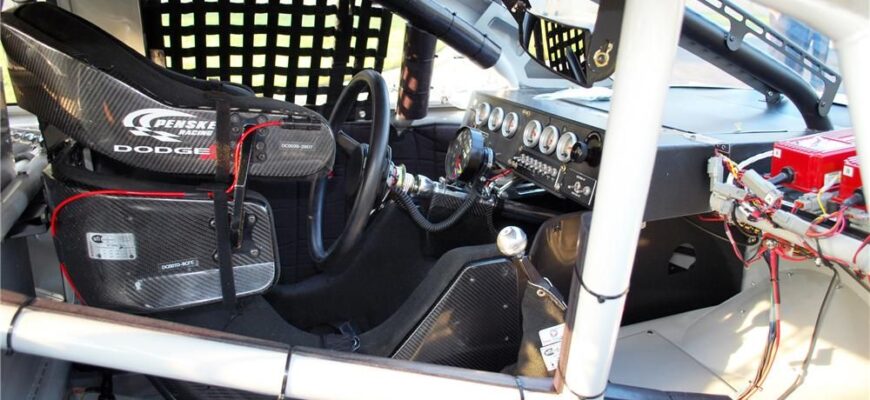
Inside the car, the cooling shirt (or vest, depending on preference) worn beneath the firesuit connects to a pump. Cesar Villanueva, Kyle Larson`s interior specialist at Hendrick Motorsports, explained that the pump can be mounted in various locations.
The pump circulates water mixed with antibacterial and antifungal fluid to keep the system clean and prevent clogs. Clogging would stop the pump. However, system failure can occur for reasons beyond just clogging during a race.

Austin Dillon described a system failure as being “trapped in a bad situation.” He noted that if it fails, there`s little a driver can do except shut it off and potentially try to drain the hot water if possible, emphasizing its critical function as a “lifeline.”
Failure means the circulated fluid becomes hot, essentially “boiling” the driver with no relief if the water cannot be dumped from the system.
“It`s great until it`s not,” Logano commented, but stressed that failures are infrequent. “But more times than not, it`s great. Honestly, they`ve done a good job developing that whole system.” He noted that earlier versions were “really heavy, which is why no one used it,” but the current systems are much more efficient. He concluded that any technology that helps a driver be “physically fresher” and mentally sharper “at the end of a race” is beneficial.
Logano added, “I don`t care how good of shape you`re in, you`re going to be fatigued after 400 or 500 miles. If you can keep yourself a little fresher, it`s probably worth it.”
Naturally, weight is a concern in racing. Driver comfort is important, but car performance is paramount, and added weight affects lap times. Despite the penalty, the cooling system`s benefits have necessitated its adoption. Villanueva estimated the unit adds about 6.5 to 7 pounds.
Chris Buescher agreed, stating, “I think we`ve accepted some of the weight penalty in wearing it, because you have to make sure you`re as fresh as possible to fight at the end of these races.”
Tyler Reddick started using a cooling shirt in 2021 after losing weight. He found that without the additional “insulation” he previously had, his core temperature rose too quickly, requiring a system to better regulate it.
Reddick`s summary perfectly encapsulates the value of the cooling shirt in NASCAR: “A lot of drivers use it,” he said, adding, “I think what it does for cooling the body is probably the most efficient thing that we have.”