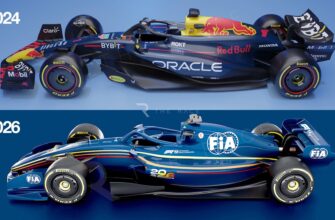
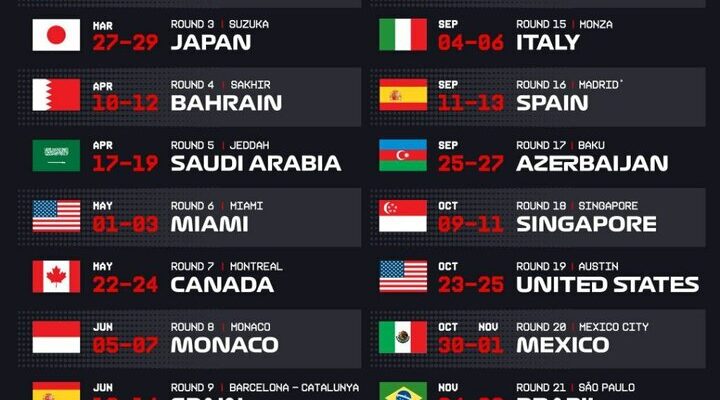
The year 2026 represents more than just a regulatory shift for Formula 1; it heralds a financial and logistical pivot point for the global calendar. As the sport’s popularity continues its exponential surge, driven by shrewd management and targeted media, the supply of Grand Prix slots has dramatically failed to keep pace with the demand from eager host nations. The result is a fierce, zero-sum competition for a finite number of highly lucrative weekend slots.
With contracts for several major races expiring before the end of the decade, the next five years will determine the geopolitical footprint of the sport for a generation. Liberty Media, F1’s owner, is currently balancing the desires of high-spending emerging markets against the logistic constraints and sustainability concerns voiced by teams and drivers.
- The Conundrum of the 24-Race Ceiling
- The Priority: Securing a Foothold in Africa
- Kyalami, South Africa
- Rwanda: The Geopolitical Tightrope
- The Southeast Asian Financial Skirmish
- Bangkok, Thailand (Street Race Ambitions)
- Sepang, Malaysia (The Cost Barrier)
- Confirmed Rotations and New European Hubs
- F1 Grand Prix Contract Lengths (As of 2026)
The Conundrum of the 24-Race Ceiling
The operational framework governing Formula 1, the Concorde Agreement, currently sets an upper limit of 25 races per season. However, following considerable resistance from paddock staff and marquee drivers—including champions like Max Verstappen, Lewis Hamilton, and Fernando Alonso—F1 CEO Stefano Domenicali has firmly capped the annual schedule at 24 events. This self-imposed restriction, aimed at preventing burnout, makes every open contract negotiation a high-stakes auction.
The challenge is evident: three races are held annually in the United States, yet major economic regions like Africa and Southeast Asia remain severely underrepresented. This imbalance has fueled intense lobbying from countries eager to secure their place in the F1 economy, leading to a constant rotation of hopefuls waiting in the wings: South Korea, India, and even potential street circuits in New York and Chicago are vying for attention.
The Priority: Securing a Foothold in Africa
The desire for a return to the African continent is arguably F1’s most significant stated expansion goal. While the continent hosted 23 races historically, primarily at Kyalami in South Africa, the Grand Prix has been absent since 1993.
Kyalami, South Africa
Kyalami remains the most viable candidate. Representatives confirmed that facility upgrades necessary to meet the FIA’s stringent Grade 1 certification—required for hosting an F1 race—have been approved. While this removes a key technical hurdle, F1 management is exercising caution. Domenicali noted in mid-2025 that a deal is “a long way off,” emphasizing the need for the “right investment, and the right strategic plan.” The implication is clear: the financial proposal must be structured for long-term commitment, not just a fleeting return.
Rwanda: The Geopolitical Tightrope
A more controversial, yet actively discussed, option is Rwanda. Talks were described as “serious” in 2024, with the country presenting what Domenicali called a “good plan.” The idea has celebrity endorsement, notably from Lewis Hamilton, who cited Rwanda as one of his favorite places and actively supports the push for an African GP.
However, the pursuit of a Rwandan race entered murky geopolitical waters in early 2025. The Democratic Republic of Congo foreign minister urged F1 to cease negotiations, citing ongoing conflict between the nations. F1 responded by stating it was “monitoring the situation”—a boilerplate corporate statement that provides little reassurance to humanitarian concerns but ensures that the highly desired African slot remains open for bidding, regardless of the complexity.
The Southeast Asian Financial Skirmish
The current calendar already features high-profile races in Singapore, Japan, and China, but Southeast Asia continues to present opportunities for highly profitable street races.
Bangkok, Thailand (Street Race Ambitions)
Thailand is not interested in hosting F1 at its existing FIA-accredited circuit in Buriram (Chang International Circuit). Instead, the government is committed to delivering a glamorous street race in Bangkok, mirroring the success seen in Singapore and Saudi Arabia. In mid-2025, the Thai government approved a substantial $1.23 billion bid to host five events between 2028 and 2032. The proposed 3.54-mile circuit, located near the Krung Thep Aphiwat Central Terminal, signals a serious, well-funded attempt to integrate F1 into the region’s urban landscape.
Sepang, Malaysia (The Cost Barrier)
The Sepang International Circuit, which hosted memorable races from 1999 to 2017, is consistently cited as a potential returnee. Sepang`s management confirmed readiness to host if F1 were to return. Yet, the main barrier remains purely financial. Declining ticket sales combined with soaring hosting fees—reported to be around $70 million per year—led the Malaysian government to deem the event “unaffordable.” This provides a stark, quantifiable example of how the new era of F1 expansion prioritizes hosting revenue over historic circuit affinity.
Confirmed Rotations and New European Hubs
While emerging markets dominate the headlines, Europe is also seeing a significant shuffle, characterized by rotational schedules and new urban venues designed to maximize commercial impact.
- Madrid (Spain): Replacing Barcelona, Madrid’s new Madring street circuit will host the Spanish Grand Prix from 2026 until 2035. This long-term commitment solidifies the shift toward city-based events in established markets.
- Portimao (Portugal): The Portimao circuit, which served as an effective temporary venue during the pandemic, is confirmed to return to the calendar for a two-year stint in 2027 and 2028.
- The European Rotation: F1 is resurrecting the concept of rotating circuits to keep traditional venues viable without overloading the calendar. Belgium’s historic Spa-Francorchamps, though contracted until 2031, will skip 2028 and 2030. These gaps are expected to be filled by other classic European circuits, potentially allowing the return of Grands Prix in France or Germany, albeit on a temporary basis.
The battle for the F1 calendar slot is no longer about racing prestige; it is a complex intersection of geopolitics, infrastructure readiness, and exorbitant hosting fees. For every country that secures a race, several others must be financially capable and politically prepared to wait for the next open slot.
F1 Grand Prix Contract Lengths (As of 2026)
| Race | Circuit | Year Expires |
|---|---|---|
| Miami Grand Prix | Miami International Autodrome | 2041 |
| Austrian Grand Prix | Red Bull Ring | 2041 |
| Australian Grand Prix | Albert Park Circuit | 2037 |
| Bahrain Grand Prix | Bahrain International Circuit – Sakhir | 2036 |
| Spanish Grand Prix (Madrid) | Madring – Madrid | 2035 |
| Monaco Grand Prix | Circuit de Monaco – Monte Carlo | 2035 |
| Canadian Grand Prix | Circuit Gilles Villeneuve | 2035 |
| British Grand Prix | Silverstone Circuit | 2034 |
| United States Grand Prix | Circuit of the Americas | 2034 |
| Hungarian Grand Prix | Hungaroring | 2032 |
| Qatar Grand Prix | Lusail International Circuit | 2032 |
| Belgian Grand Prix** | Spa-Francorchamps | 2031 |
| Italian Grand Prix | Autodromo Nazionale Monza | 2031 |
| Chinese Grand Prix | Shanghai International Circuit | 2030 |
| Saubi Arabian Grand Prix | Jeddah Corniche Circuit | 2030 |
| Azerbaijan Grand Prix | Baku City Circuit | 2030 |
| Brazil Grand Prix | Interlagos Circuit | 2030 |
| Abu Dhabi Grand Prix | Yas Marina Circuit | 2030 |
| Japanese Grand Prix | Suzuka Circuit | 2029 |
| Mexico Grand Prix | Autodromo Hermanos Rodriguez | 2028 |
| Singapore Grand Prix | Marina Bay Street Circuit | 2028 |
| Las Vegas Grand Prix | Las Vegas Street Circuit | 2027 |
| Barcelona Grand Prix | Circuit de Barcelona-Catalunya | 2026 |
| Dutch Grand Prix | Circuit Zandvoort | 2026 |
| **Belgium`s contract runs to 2031 but will be rotated out in 2028 and 2030. | ||