
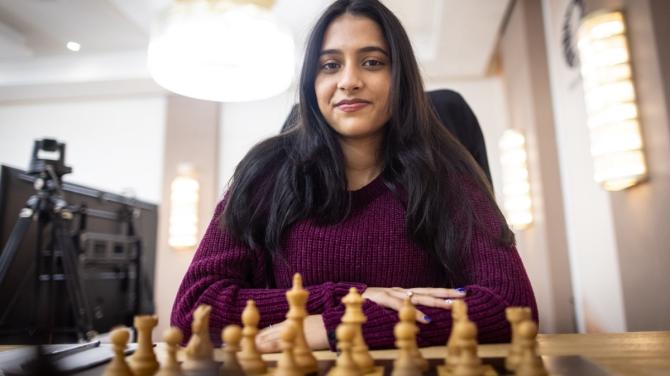
The pinnacle of women`s chess, the 2025 FIDE Women`s World Cup, has delivered a final match of captivating tension. What was anticipated to be a decisive showdown between India`s chess stalwarts, Koneru Humpy and Divya Deshmukh, has instead escalated into a thrilling series of tiebreakers. Following two hard-fought classical games that yielded no clear winner, the championship now hangs precariously on the rapid and blitz formats, a true test of nerve and quick thinking.
The Path to Prolonged Play: A Strategic Stalemate
The classical segment of the final saw both players exhibiting immense skill, yet neither managed to land the decisive blow. Game 1, played on Saturday, concluded in a draw, but for Divya Deshmukh, it carried the sting of a missed opportunity. Her post-game reflections candidly revealed her frustration:
“I was quite disappointed with the first game obviously because I saw everything and I just always ended up making the wrong choice, and it was quite a pity. The first game didn`t go my way and even though it was a draw it kind of felt like a loss. So, I was just trying to recover and today was considerably easier.”
This sentiment highlights a peculiar irony in competitive chess: a draw, typically a neutral outcome, can feel like a psychological defeat when winning chances were squandered. It speaks volumes about the mental fortitude required at this elite level.
Game 2, played on Sunday, showcased Divya`s commendable resilience. Facing Koneru Humpy`s Queen pawn opening, she demonstrated heightened composure. While Humpy gained an optical advantage with her bishop pair early on, Divya expertly maneuvered her knights, neutralizing white`s threats. The game saw a steady exchange of minor pieces and rooks, eventually transitioning into a queen-and-minor-piece endgame. Humpy`s attempt to force a win with a pawn sacrifice ultimately proved fruitless, as the position stabilized, leading to a draw in 34 moves after Humpy recovered the pawn and Divya executed a series of checking moves, forcing a repetition. This draw set the stage for the high-stakes tiebreakers.
The Duelists: Experience Versus Rising Star
The final features a fascinating generational clash. Koneru Humpy, a veteran Grandmaster, brings to the board years of experience, a deep understanding of classical strategy, and proven performance under immense pressure. Her calm demeanor and precise calculations have made her a formidable force in women`s chess for over two decades.
On the other hand, Divya Deshmukh represents the vibrant future of Indian chess. A prodigious talent, she has rapidly climbed the ranks with her sharp tactical vision and aggressive playing style. Her journey to the final has been marked by fearless play, challenging established norms and demonstrating a relentless will to win. The tiebreakers are not merely a contest of moves, but also a battle of contrasting styles and temperaments.
The Crucible of Tiebreakers: A Test of Speed and Nerve
The FIDE rulebook, ever the purveyor of escalating drama, dictates a grueling multi-stage tiebreaker format, progressively stripping away precious seconds as the stakes mount with each unresolved bout. This transition from classical chess, where players have hours to deliberate, to rapid and blitz formats, fundamentally alters the game dynamics. Time pressure becomes an active opponent, often forcing instinctual decisions over painstaking analysis.
The sequence of play for the tiebreakers is as follows:
- Initial Stage: Two games of 15 minutes per player, with a 10-second increment after every move.
- Second Stage (if still tied): Two additional games of 10 minutes per player, also with a 10-second increment.
- Third Stage (if the deadlock persists): Two games of 5 minutes per player, coupled with a 3-second increment per move.
- Final Decider (if an outright winner is yet to emerge): One more set of games, a true blitz sprint, with 3 minutes per player and a 2-second increment per move.
Each stage ratchets up the tension, transforming the intellectual battle into a mental and physical endurance test. The players must not only outwit their opponent but also conquer the ticking clock, a challenge that often leads to spectacular blunders and heroic saves. For spectators, these formats are pure adrenaline, a stark contrast to the patient strategic buildup of classical chess.
What`s at Stake Beyond the Board
The FIDE Women`s World Cup title is more than just a trophy; it`s a significant milestone in a player`s career. The winner not only secures global recognition and substantial prize money but also earns crucial qualification spots for higher-tier tournaments, potentially paving the way to a shot at the Women`s World Championship itself. For Humpy, it`s an affirmation of her enduring legacy; for Divya, it`s a chance to cement her status as a new powerhouse on the international stage.
Anticipation Builds for the Decisive Day
As Koneru Humpy and Divya Deshmukh prepare for the rapid-fire challenges ahead, the chess world watches with bated breath. This final is no longer just about strategic brilliance; it`s about composure under pressure, adaptability to different time controls, and the sheer will to emerge victorious when the board is balanced and the clock is relentless. The tiebreakers promise a dramatic conclusion to an already captivating championship, where every second and every move will count.