Following Lando Norris`s highly anticipated championship victory in the 2025 season—a finale that saw the title decided by the thinnest of margins—Formula 1 now enters a period of seismic change. The winter break, perpetually too short for the engineering departments, has been utterly consumed by the looming 2026 regulations. This isn`t just another season; it is a fundamental reset of the sport`s technical parameters, demanding unprecedented engineering agility.
Teams face the colossal task of mastering entirely new car concepts, driven by a redesigned power unit formula. The traditional narrative of incremental performance gains has been shelved in favor of a total structural rethink. Here is the comprehensive breakdown of the key dates and shifts defining the 2026 Formula 1 World Championship.
- The Technical Paradigm Shift: New Engines and Aero
- An Expanded Grid: Welcoming Audi and Cadillac
- The Crucial Prologue: Pre-Season Testing Schedules
- Private Barcelona Shakedown
- Official Bahrain Testing
- The Global Gauntlet: The Formula 1 2026 Calendar
- Key Calendar Highlights:
- Outlook: Uncertainty as the Only Certainty
The Technical Paradigm Shift: New Engines and Aero
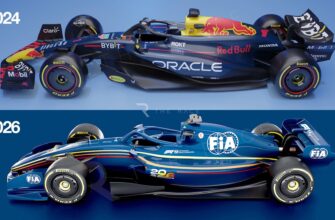
The 2026 regulations focus intensely on sustainability and power unit architecture. The engine formula shifts toward a 50/50 split between internal combustion power and electrical energy, dramatically increasing the importance of the MGU-K component while simplifying the MGU-H. This emphasis on electrical output means greater strategic variability and a significant unknown regarding performance correlation between the test bench and the track.
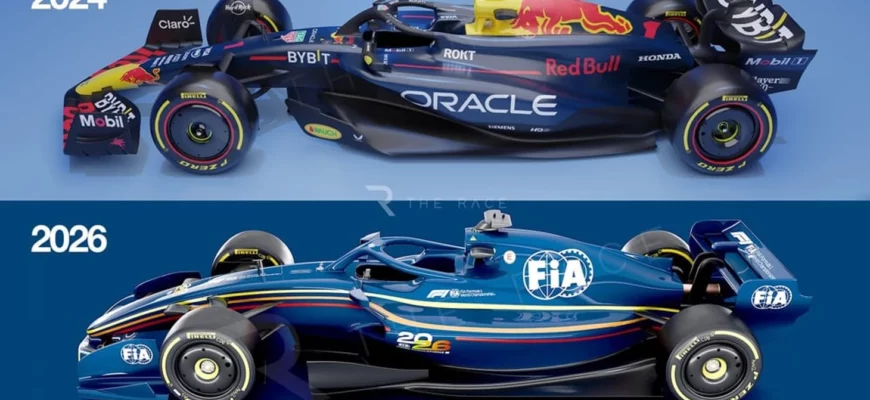
Furthermore, aerodynamic regulations are designed to facilitate lighter, smaller cars, purportedly to enhance closer racing. Teams are navigating this new regulatory minefield, seeking not just speed, but efficiency under the dramatically altered fuel and hybrid mandates. The competitive order established over the past few seasons is, for all intents and purposes, nullified. Every team begins on a blank sheet of carbon fiber.
An Expanded Grid: Welcoming Audi and Cadillac
The 2026 season officially welcomes two major automotive heavyweights, expanding the field to 11 teams and 22 drivers—a logistical challenge for race promoters, and a welcome boost for competition.
- Audi: Having completed its acquisition of the Sauber team, Audi enters as a fully factory-backed operation, supplying both chassis and power unit. This comprehensive commitment signals a serious intent to challenge the established frontrunners immediately.
- Cadillac (Andretti Global): Marking the first full grid expansion in decades, the entry of Cadillac provides a vital American presence. Their assimilation into the elite motorsport ecosystem will be watched closely, particularly regarding their integration of power unit supply and chassis development against the established ten teams.
The Crucial Prologue: Pre-Season Testing Schedules
Testing is never merely practice; in 2026, it is validation. With radically new cars, every lap provides critical data toward rectifying inevitable design flaws. Teams have orchestrated a two-part testing regime: a closed, technical shake-down followed by the public performance preview.
Private Barcelona Shakedown
In a move independent of F1 governance, teams have privately agreed to an extensive four-day session at the Circuit de Barcelona-Catalunya. This highly secretive operation is focused purely on correlation and reliability checks. Crucially, no public timing data will be released, leaving the immediate competitive landscape entirely opaque until Bahrain.
- Jan. 26-30: Circuit de Barcelona-Catalunya (Behind Closed Doors)
Official Bahrain Testing
The true gauge of early pace will occur over six televised days in Bahrain, split into two separate three-day windows. This is the first public opportunity to observe how the new regulations translate into track performance. The desert heat and abrasive surface of Sakhir will rigorously test the cooling and durability of the new power units.
- Feb. 11-13: Pre-season testing in Bahrain (Session 1)
- Feb. 18-20: Pre-season testing in Bahrain (Session 2)
The Global Gauntlet: The Formula 1 2026 Calendar
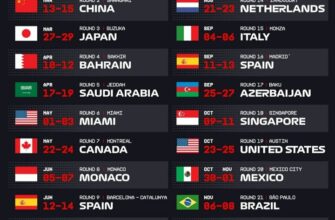
The schedule is set for a historic 24-race season, commencing in Australia and concluding, as tradition dictates, in Abu Dhabi. The calendar is notable for its logistical demands, the prominence of the United States market, and the introduction of a high-profile new European venue.
The championship will also incorporate six Sprint Race weekends, maximizing points available and compressing the traditional format at key events, including the British and Singapore Grands Prix.
Key Calendar Highlights:
- United States Saturation: The U.S. continues its dominant presence, hosting three separate Grands Prix: Miami, Austin (Circuit of the Americas), and the late-season spectacle in Las Vegas.
- The Spanish Shift: For the first time, Spain will host two Grands Prix, with the traditional race at Barcelona-Catalunya being joined by the high-profile, highly anticipated urban circuit in Madrid later in the season.
- Round 1 (March 6-8): Australian Grand Prix, Melbourne
- Round 2 (March 13-15): Chinese Grand Prix, Shanghai (Sprint Weekend)
- Round 3 (March 27-29): Japanese Grand Prix, Suzuka
- Round 4 (April 10-12): Bahrain Grand Prix, Sakhir
- Round 5 (April 17-19): Saudi Arabian Grand Prix, Jeddah
- Round 6 (May 1-3): Miami Grand Prix, Miami (Sprint Weekend)
- Round 7 (May 22-24): Canadian Grand Prix, Montreal (Sprint Weekend)
- Round 8 (June 5-7): Monaco Grand Prix, Monaco
- Round 9 (June 12-14): Barcelona-Catalunya Grand Prix, Barcelona
- Round 10 (June 26-28): Austrian Grand Prix, Spielberg
- Round 11 (July 3-5): British Grand Prix, Silverstone (Sprint Weekend)
- Round 12 (July 17-19): Belgian Grand Prix, Spa-Francorchamps
- Round 13 (July 24-26): Hungarian Grand Prix, Budapest
F1 Summer Break
- Round 14 (August 21-23): Dutch Grand Prix, Zandvoort (Sprint Weekend)
- Round 15 (September 4-6): Italian Grand Prix, Monza
- Round 16 (September 12-14): Spanish Grand Prix, Madrid
- Round 17 (September 24-26): Azerbaijan Grand Prix, Baku*
- Round 18 (October 9-11): Singapore Grand Prix, Marina Bay (Sprint Weekend)
- Round 19 (October 23-25): United States Grand Prix, Texas
- Round 20 (Oct. 30- Nov. 1): Mexico City Grand Prix
- Round 21 (November 6-8): Sao Paulo Grand Prix
- Round 22 (November 19-21): Las Vegas Grand Prix
- Round 23 (November 27-29): Qatar Grand Prix, Lusail
- Round 24 (December 4-6): Abu Dhabi Grand Prix, Yas Marina
*Note: The Azerbaijan Grand Prix will run on Saturday to accommodate a national day observance.
Outlook: Uncertainty as the Only Certainty
The transition to the 2026 regulations is the most significant competitive inflection point since the V6 turbo-hybrid era began in 2014. The combination of new power unit requirements, revised aerodynamics, and the integration of new teams like Cadillac creates a highly volatile, unpredictable environment. Teams that master the synergy between the ICE and the vastly increased electrical component quickest will define the initial trajectory of this new technical cycle. Spectators should anticipate a competitive order that may bear little resemblance to the years preceding this ambitious regulatory shift.