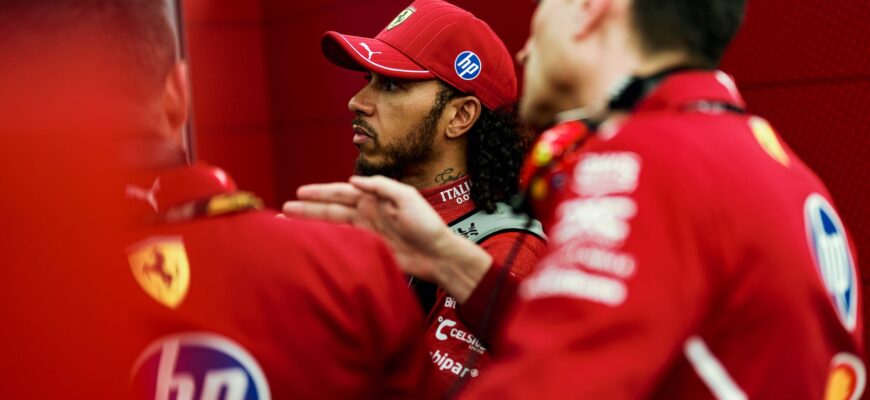
After a disappointing qualifying session in Bahrain where Lewis Hamilton started ninth, there were questions about his adaptation to Ferrari. Despite his past success at this circuit, he was significantly slower than pole position and his teammate Charles Leclerc.
Hamilton admitted to reporters that he lacked answers for his qualifying performance and that it was a low point in his early Ferrari career.
Four races of inconsistent performance
Hamilton`s initial races with Ferrari have been marked by inconsistency. He noted the significant differences between the Ferrari and Mercedes cars he had driven for over a decade, indicating an expected adjustment period. While he anticipated this challenge, the initial hype surrounding his Ferrari move set high expectations.
A surprise sprint race win in China offered a positive result after a difficult debut in Australia. However, this Chinese sprint performance seemed to be an outlier, as he struggled to replicate it, highlighting the ongoing adaptation process.
Following the Japanese Grand Prix, Hamilton felt progress was being made, suggesting a potential car adjustment that could close the gap to Leclerc. Considering the minimal time difference between them in previous qualifying sessions, this adjustment was anticipated to be significant for Bahrain.
The car adjustments were indeed implemented for Bahrain, making his poor qualifying performance even more perplexing. While he was slightly faster than Leclerc in Q1, he fell behind by a larger margin in Q2 and significantly in Q3. A track limits violation further complicated his Q3.
Telemetry data revealed that Hamilton was matching Leclerc in the initial corners but lost time in slower corners, particularly Turns 8, 10, and 11-13, due to Leclerc carrying more speed. Importantly, this time loss wasn`t due to driving errors but a lack of pace compared to his teammate.
Race Day Turnaround
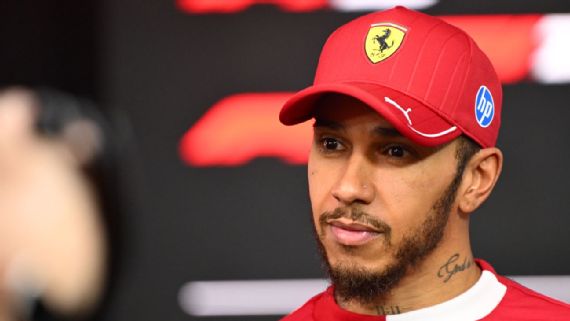
Sunday`s race presented a more encouraging narrative for Hamilton. He improved from ninth to fifth place, experiencing a positive shift in car feel during the second stint.
Ferrari`s strategy involved starting on medium tires, unlike most of the top ten who started on softs. This allowed for a longer first stint. After pitting on lap 18, Hamilton rejoined in 11th, while Leclerc remained in podium contention.
Immediately after his pit stop, Hamilton set the fastest lap and proceeded to overtake five cars within the next eight laps, moving up to sixth. Despite Russell having fresher tires, Hamilton significantly closed a gap to him before a safety car period.
Comparing his pace to Leclerc during the same period, Hamilton only lost minimal time despite his overtaking maneuvers. After passing Ocon, he even started closing the gap to Leclerc.
This improved pace coincided with a better feeling in the car and a renewed sense of optimism for future races.
Hamilton described his race as “much more positive,” highlighting an improved connection with the car and a better balance in the middle stint. He acknowledged that qualifying remains an area for improvement but expressed confidence that addressing it will lead to stronger weekends.
Hamilton has consistently spoken about adapting his driving style to the Ferrari. In Bahrain, he moved his setup closer to Leclerc`s. During the second stint, he seemed to gain a better understanding of how to extract more performance from this setup, particularly in braking. This provided a hopeful outlook for the upcoming Saudi Arabian Grand Prix.
Hamilton reflected on his long-term driving style at Mercedes, noting the need for a different approach with Ferrari, including using engine braking and adapting to Brembo brakes compared to his previous Carbon Industrie brakes. He believes he is gradually adapting to these changes.
He recognized Leclerc`s consistent setup approach throughout race weekends and admitted he needs to improve his own weekend preparation to better match Leclerc`s performance.
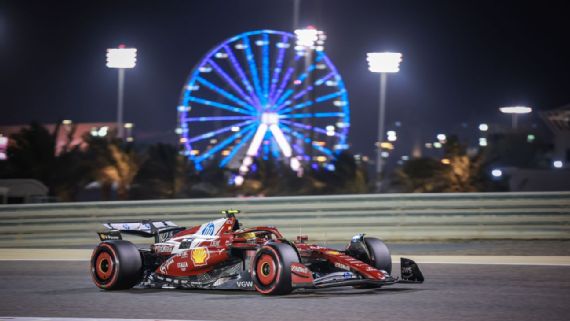
Ferrari team principal Frédéric Vasseur acknowledged the adaptation challenges Hamilton faces, encouraging self-reflection when Hamilton underperforms compared to Leclerc.
Vasseur emphasized that adjusting from 12 years with Mercedes to Ferrari takes time and improvement is needed from both Hamilton and the team. He appreciates Hamilton`s mindset to improve himself and adapt to the car, while the team will also work to tailor the car to Hamilton`s needs.
Vasseur welcomed Hamilton`s disappointment after qualifying, seeing it as a sign of his high standards and desire to improve after a weekend where he had shown better pace earlier on.
Despite the sprint race in China being a potential false indicator, the move towards Leclerc`s setup and Hamilton`s improved understanding offer a more optimistic outlook for Saudi Arabia. Hamilton aims to start weekends in a better position and maintain consistency, believing he has gained insight into how to drive the car effectively, which should lead to better qualifying and overall race weekends.