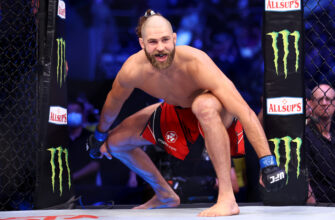

The world of mixed martial arts is a perpetual motion machine, but every so often, it requires a significant jolt to reset its trajectory. According to recent proclamations, that jolt is slated for June 2026: the long-awaited return of Conor McGregor. Absent from the octagon since his leg injury at UFC 264 in July 2021 against Dustin Poirier, McGregor’s declared comeback is not merely another fight; it represents a strategic pivot point for the Ultimate Fighting Championship (UFC) and potentially the entire sport. In an era where star power can often feel as fleeting as a featherweight punch, `The Notorious` stepping back into the fray could be the singular best development for MMA`s evolution in the coming years.

The Enduring McGregor Phenomenon
To understand the magnitude of McGregor`s potential return, one must first recall the phenomenon he created. Before him, few fighters transcended the sport to become global household names. McGregor, with his potent mix of electrifying knockouts, unparalleled charisma, and masterful self-promotion, didn`t just win fights; he won headlines, broke pay-per-view records, and became a brand unto himself. He transformed fight announcements into global events, press conferences into must-watch spectacles, and weigh-ins into theatrical performances. His absence has left a void, and while many have attempted to fill it, none have replicated his unique blend of athletic prowess and crossover appeal.
Addressing the Superstar Vacuum
Since the retirements of Ronda Rousey and Brock Lesnar, and McGregor`s extended hiatus, the UFC has grappled with a noticeable “superstar problem.” While a new generation of incredibly skilled athletes like Alex Pereira and Ilia Topuria have emerged, captivating hardcore fans with their technical brilliance, none have quite managed to break into the mainstream consciousness with the same seismic impact. The difference between a celebrated champion and a global superstar often lies beyond the win-loss column – it’s about cultural resonance, narrative magnetism, and the ability to draw in casual viewers who might otherwise never tune into a combat sports event. McGregor`s comeback directly addresses this deficit, offering a ready-made, widely recognized personality to anchor major events and capture broad attention.
“McGregor`s return represents more than just entertainment; it`s a strategic move to capitalize on untapped market potential and reassert UFC`s dominance in the global sports landscape.”
Strategic Timing: Leveraging the New TV Deal
The timing of McGregor`s proposed return aligns almost perfectly with a significant shift in the UFC`s broadcasting strategy. The recent acquisition of a monumental $7.7 billion US TV rights deal with Paramount and CBS signals a strategic move away from a solely pay-per-view centric model towards broader cable television distribution. This transition is designed to expose the sport to millions of new viewers, fundamentally expanding MMA`s audience base. What better ambassador to introduce this newly accessible, high-octane sport to a fresh demographic than its most recognizable and polarizing figure? McGregor`s fights have historically been appointment viewing, compelling millions to part with their hard-earned money. Now, available on mainstream cable, his magnetic presence could convert curious observers into lifelong MMA enthusiasts, propelling the sport`s growth exponentially by 2032, when the current rights deal concludes.
Reaffirming UFC`s Market Dominance
Beyond star power and viewership, McGregor`s return also serves a crucial strategic purpose for the UFC`s organizational credibility. Recent years have seen challenges in securing highly anticipated matchups and retaining elite talent. High-profile departures, such as Francis Ngannou and Nate Diaz pursuing opportunities elsewhere, coupled with difficulties in finalizing mega-fights like Jon Jones vs. Tom Aspinall, have raised questions about the UFC`s ability to consistently deliver on fan expectations. McGregor’s prolonged absence, reportedly due to behind-the-scenes negotiations, added another layer of complexity. His successful re-integration into the fight schedule is a clear demonstration that the UFC can still navigate complex contractual landscapes, secure its biggest stars, and, most importantly, deliver the spectacles that originally built its reputation. It’s about proving that the organization remains the premier destination for top-tier combat sports action, capable of orchestrating events that defy industry norms.
The Inevitable Impact: Win, Lose, or Draw
One of the most compelling aspects of a McGregor return is its guaranteed impact, regardless of the outcome. If he wins, it validates his legendary status, fuels a new championship run, and sets up even bigger fights, potentially reigniting the pay-per-view model for specific events even within the new TV rights framework. If he loses, the victor inherits a portion of his colossal spotlight, instantly becoming a significantly larger star. This “superstar incubator” effect is invaluable in a sport constantly seeking its next generation of icons. It`s a win-win scenario for the UFC, ensuring that the spotlight remains firmly on its product.
While 2026 feels distant, the mere prospect of Conor McGregor`s comeback is already reshaping the narrative of mixed martial arts. It is not just about a fighter returning to the cage; it is about a global enterprise strategically deploying its most potent asset to capitalize on a new broadcast era, solidify its market position, and introduce its thrilling spectacle to an unprecedented audience. His return, if executed as planned, is less a singular event and more a meticulously timed strategic play, promising to inject unparalleled excitement and commercial impetus into the very fabric of mixed martial arts for years to come.